Spring Cleaning
Spring cleaning may have originated with the Persian New Year, which falls on the first day of spring. Iranians continue the practice of “khooneh tekouni” which means “shaking the house” just before the New Year. Everything in the house is thoroughly cleaned, from the drapes to the furniture. Another possibility can be traced to the ancient Jewish practice of thoroughly cleansing the home in anticipation of the springtime feast of Passover. In remembrance of the Jews’ hasty flight from Egypt, during the seven-day observance of Passover there are strict prohibitions against eating or drinking anything that may have been leavened or fermented with yeast. Observant Jewish people are not only supposed to refrain from leavened foodstuffs (known in Hebrew as chametz), they are expressly commanded to rid their homes of even small remnants of chametz for the length of the holiday. This constituted a thorough “spring cleaning” of the house.
China has its own longstanding tradition of spring cleaning. Like Iranians, the Chinese people clean their homes in anticipation of the New Year (which occurs shortly after the Western new year). Tradition is to sweep their floors and clean their homes to get rid of bad luck and misfortune that may have accumulated during the previous year. Once the house is a clean slate, good fortune is welcomed by observing a prohibition against sweeping for the few days following the new year in order to prevent sweeping away any good fortune that comes with the turn of the year.
In our modern American culture, and I’m pretty sure most others, spring brings out the need to clean house and freshen up everything from the winter doldrums. Spring’s fresh air outside makes me want to bring that inside, open up the windows and air out! In honor of this tradition, I’d like to share a few of my favorite tricks and products.
- A homemade window cleaning solution: mix 1 16 oz. bottle of rubbing alcohol, 1/4 cup of ammonia, 1 or 2 drops of dishwashing liquid (no more!) to a gallon of water. Your windows will positively sparkle with no streaks. I also use this to clean countertops, and to get rid of mold growth on my grout. It cleans plastic, and is a good general overall cleaner, and cuts grease… I can’t say enough about this solution! Be careful though around colors and porous finishes, and definitely NOT on wood, although it works great on the outside painted wood around my windows.
- One thing I can’t do without either, especially on job sites: the Mr. Clean Magic Eraser sponges. No matter how careful everyone is on the site, there are always scuff marks on the new paint job…and a lightly dampened Mr. Clean does the trick! The sponge is also great for getting up paint drips that are not too old.
- Cleaning stainless steel. I found out from a very particular client’s cleaning lady that good ole Windex does the job. She also recommended using the recycled brown paper towels when wiping the Windex off the stainless steel surface, as this paper towel doesn’t leave lint. Windex leaves a film so that it inhibits fingerprints. I now clean all my clients’ appliances with this when we are finishing up a job and there are lots of contractors’ fingerprints everywhere.. Works like a charm!
- And finally, for all those people with yellowed silk: I learned that adding white vinegar to your wash takes out the yellow! I can say that I have five white silk blouses that look like new. What I did was to wash the blouses in the regular manner with soap, let the wash finish, and rinse. Then I ran the machine again, just with water and the white vinegar. Voila… white blouses!
There, now don’t we all feel cleaner already? Don’t forget to treat yourself with some fresh flowers!

Seeing Red …. and Yellow and Green
Hi everyone – Happy New Year! I’m delighted to announce that one of my projects is featured in the new book Today’s Historic Interiors by E. Ashley Rooney. Here’s what I said last January in my first post for 2011:
My clients. They’re first on my list for a good reason. I create interiors for my clients. What happens from my perspective is that I really get into their heads and translate their feelings and desires, their visions for their homes, and articulate them in materials and colors and shapes to create a place that’s theirs. I can’t say it enough; it’s all about the client.
Let me expand on this to kick off 2012 by telling you about this apartment in New York City’s Beekman Place historic neighborhood (more on that below). This project was also a wonderful design challenge for me. The apartment is in a lovely nineteen-thirties neo-Georgian co-op that reflects the informal, low-key elegance characteristic of this neighborhood. My client’s taste is also elegant yet informal, so making design decisions in terms of style was an easy call.
The apartment has three main rooms that can be seen throughout, so the flow between rooms was important. The ceilings are relatively high with beams and molding, typical of a pre-war apartment in New York City. Each room is a nice size, although not overly large.
My challenge? My client’s favorite colors. Having traveled extensively, he had seen and experienced many rooms whose colors he liked and asked me to include in the project two very strongly-colored oriental rugs he owned. The colors in these rugs are a deep red and a deep green, both with a saturated yellow too. How to make these three strong colors cohere without overwhelming the other design elements in each room? My philosophy of course is to work with a client’s preferences, and I believe in keeping things of personal, sentimental, or indeed of any value. But …. the carpets were intensely colored and not my usual color palette! Wow!

My client loves the feeling of a really sunny room, and he has a living room facing south with a lot of wonderful light. The choice to start with yellow in this room created the option to use deep green in the bedroom and deep red in the adjacent home-office/library/guest room.
We chose to extend the yellow into the long, narrow foyer to link it with the living room. Now we enter the apartment into a formal yet relaxed space with yellow walls and contrasting white-painted moldings and wainscoting. A gorgeous crotch-mahogany cabinet anchors the room and stores wine too. I designed a mirror to hang over this cabinet to widen the space. A cut-crystal light fixture creates movement with a dance of reflections on the ceiling. I also designed a carpet that defines the space and starts the bold color dialogue. The red on the side chairs and the bold colors of the painting give a hint of what’s to come.

As we enter the living room, one gets the full impact of the yellow. I must say that I LOVE how this room feels. Here, I introduce touches of red and green through a new rug that we found and through fabrics on the furniture. I designed the two rounded tall cabinets, built in England, to house not only books and objects but files as well. The rounded tops also soften the room. Side tables and the freestanding chair already owned by the client work beautifully with the furniture we chose. A lovely marble-topped side table serves as the bar area, and we created a focal point in the living room by placing a taller sideboard table between the two bookcase-cabinets. Artwork and two deep-red lamps created a last perfect touch.

As we enter the library at the back of the apartment, you notice that it has very little light. In this room the deep red carpet must go! Here the cozy deep red actually makes the room seem bigger. My custom cabinetry lines the room and surrounds the existing desk that my client loves.
We created special stands for the artwork to be placed above the cabinetry, giving it the illusion of being suspended in space with up lights from below. This also heightens the room’s ceiling and adds warmth. We introduced a red sofa bed for the guest room function, and added yellow pillows for a touch of lightness and to refer back to the yellow living room.

The bedroom highlights the palette’s third color, green. The client’s second rug – predominantly green – is the centerpiece, and the other elements in this room are a riff on the three-color scheme. There is a red leather chair, warm wood tones in the furniture, and green walls glazed with a softening black strié. The headboard and bed-skirt are green Ultrasuede, matching the walls, helping to make the room feel larger. You’ll notice that the artwork is again placed in an unusual way to further enhance the coziness of this room.
A note on the historical aspect of the neighborhood: Beekman Place proper runs north-south for approximately two blocks on New York City’s East Side in the low fifties. Consequently, the surrounding neighborhood is also known as Beekman Place. It is named after the Beekman family, an influential family in the city’s early history. William Beekman came to America with Peter Stuyvesant in 1647, and his descendant, James Beekman, built a mansion in this area in 1764. His house, called Mount Pleasant, was taken over and used as British headquarters during the Revolutionary War. It’s said that patriot Nathan Hale was hanged as a spy in 1776 in Beekman Place.
By the end of the nineteenth century the area had become a slum, with industry at its water’s edge. In the early twentieth, however, the area began to revitalize itself, as so often happens in New York City. Beekman Place became a fashionable neighborhood in the nineteen-twenties, sought after by some of New York City’s wealthiest and most glamorous residents, such as the Rockefellers and the Vanderbilts. Ethel Barrymore, Irving Berlin, Max Emst, Peggy Guggenheim, Marcel Duchamp and Richard Chamberlain all lived in this area as well. Now the neighborhood is a lovely respite from the surrounding hustle and bustle of the city and my client’s home is a personal, colorful oasis.
Share on FacebookHomework
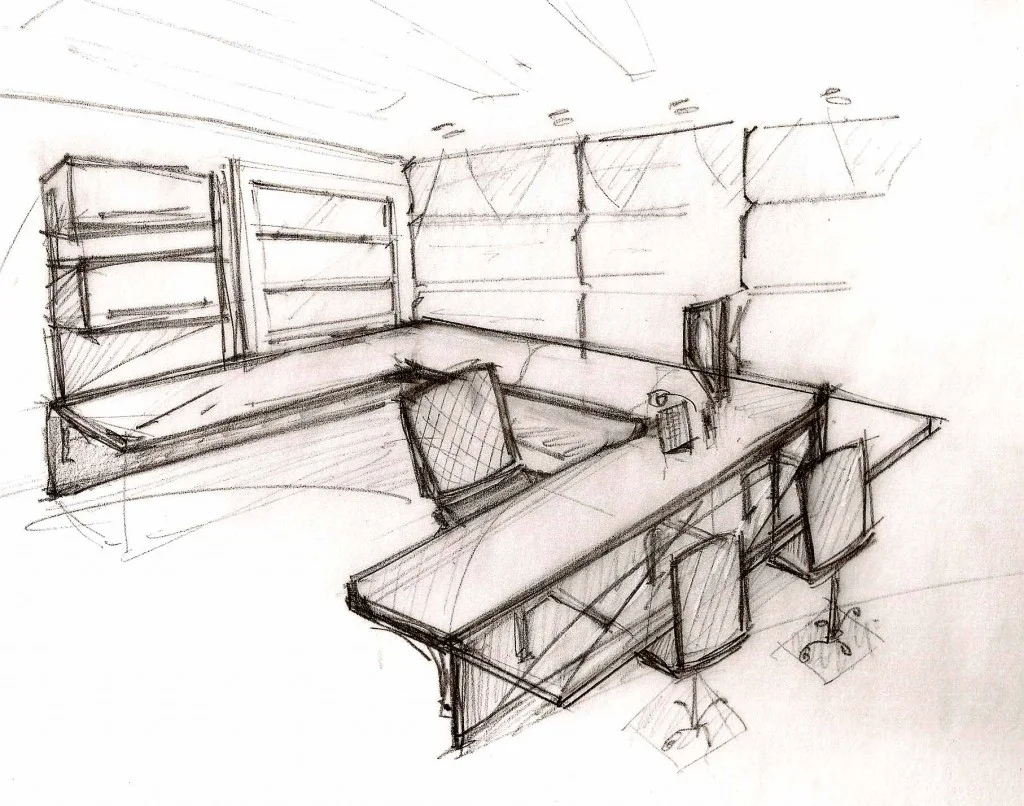
Even if our school days are years away in the past, I’ll bet most of us still feel that beginning-of-the-year feeling in September. Autumn’s here and we’re settling back into our normal work habits. With the advance of technology, the 24/7 mentality, the growing number of home businesses starting up, working at home has become more commonplace. For some, it is our principal work place, for many others, we often have days when we work from home. I’ve been seeing more interest in home offices in recent years and I put together some thoughts based on two home offices I recently designed.
To start, the need to house technological elements definitely drives the layout of the space first. Some combination of phones, computers, videoconferencing, shredders, fax/scanner/printers, and televisions all have to go in. The space has to be highly organized so that all the elements are where they need to be, nearby and easily usable, with no mess of wires and electronics.
After that is taken care of, I like to make the room comfortable, creating an atmosphere conducive to productivity. Though it’s an office, why can’t it be an enjoyable and pleasant room? Comfortable armchairs or a sofa are a great asset if you decide to move from your desk while working, or meeting with colleagues or a client. Since these days the day is never done, having a place where you can think, dream, or problem-solve is more important than ever. Calming objects like a beautiful painting or objects that you love go a long way to reduce stress.
While the offices featured here are decidedly high end, the ideas in them can be incorporated into your own home or personal workplace. And why not? You work hard, you definitely deserve to treat yourself well!
Whether you are working with a designer, or doing it yourself, here are a few tips to make sure you’re taking care of the essentials.
What’s key in this article from my point of view as a designer:
- The importance of a proper desk or table for your workspace.
- A dust-free environment for all those electronics, which means making this an easy-to-keep clean room.
- And what wires you do have: invest in a simple cord cover.
Make sure you have the proper power for whatever you need now and might add in the future. Do hire a licensed electrician to put in the right number of outlets and cable runs. Put in proper surge protectors, preferably with UPS (uninterrupted power source) system. It’s time to NOT do extension cords and have everything running off one outlet…what better way to lose your information in cyberspace? Not to mention fire hazard…
This is a real office – it’s not an attic. Rather than put up with grandma’s hand-me-down sofa that has seen its day, it’s time to reupholster! But do check out the pricing. If this isn’t a sofa that is made well to start with (though being Grandma’s, it probably was) it’s probably less expensive to buy one. I advocate always buying a good product once, as it will last forever. If you choose to buy an inexpensive sofa, just know that it has a limited lifespan.
Having your desk near a window is great. Light, light and more light is needed! Working in the dark not only strains the eyes, it can be depressing, and you don’t need that while trying to work. Just make sure you position the light so that it’s not reflecting in the computer screen.
Some people find it soothing to have a neutral environment; others find lots of color uplifting. It doesn’t matter, as long as it’s right for you. Just make sure the neutral environment has lots of texture so it’s not boring, and if you choose lots of color don’t go overboard. Think about how it looks if you have clients, colleagues or customers over.
Ok, I’m one who likes to have my current work visible, but that doesn’t have to mean stacks upon stacks all over your desk and floor. Open filing systems that roll are great for those of us who have to see our files. Otherwise, make sure you have good shelving and enough filing drawers to handle your needs.
To do this, just measure what you have and translate that into lineal feet, and that will tell you what you need. For example, you have file folders sitting on the floor. Take a tape measure and measure them. Say they measure three feet and you have ten piles; you need 30 feet of file space. Don’t forget to buy or create extra space for new files! If you don’t have “growth” room, then be diligent about putting files in boxes and storing them off site. As I have project files from 30 years ago, I must keep my files. They are stored off site but are easily accessible when my clients call and need some information on some material found years ago! This works for books too.
Just find something that you love that removes stress when you look at it, even just for a moment. Maybe a souvenir from your travels that can really take you away! And here’s my take on buying art: buy with your eyes, not your pocketbook or with someone else’s opinion. Please please don’t buy something to “match” your décor. I have a client who collected museum posters from his travels; he loved them, we framed them beautifully, and they look great in his apartment! A good framing job is essential.
I could go on and on about art and how to install, place and pick, but maybe that’s another blog!
Share on FacebookShore Decor Project Story
Long Island, New York Home (Click on images to view larger)
This Long Island waterfront home was a three-part project, with the three parts executed over twenty years. What makes it memorable is that I was part of a fabulous team that worked together so well starting in 1984, again with additions to the team in 1989, and then again in 2003. Lots of creativity and synergy with the client and the team helped make a beautiful estate. I’m very lucky to have these clients, a couple which placed their trust in me not only with this project, but also with many other projects over the years.
The clients owned a late-nineteenth century house they had purchased in the 1960s. In the seventies, they decided to purchase the equally old house next door to use as their guesthouse. These homes were originally built as summer homes with no kitchens. Everyone was expected to eat at the local Inn and there were only a few year-round homes in this area. There was no insulation and minimal plumbing.
![]()
The project started in 1984 when Bill Taylor of Taylor Brothers Construction and I were hired to oversee renovation of the guesthouse on the property. The house had asbestos siding, a badly built one-story addition as a kitchen and an outside staircase leading to the second floor. An old photograph of the original house was discovered, showing it to have been a beautiful Victorian shingle style house with a wraparound porch. We used this to realize the makeover. We started by removing all the exterior cladding and interior sheetrock, exposing the original studs of the house and starting over with new materials, new electrical and plumbing, new everything! We kept all the original details and replicated them exactly on the doorframes and trim. The only thing we were able to keep were the original floors, even though they needed a lot of restoration work.
To add light to the downstairs, we decided to make all of the windows and interior door openings match in height, using as a reference the full height of the few existing first-floor floor-to-ceiling windows. New French doors, leading to the porch that now fully wrapped the house, helped to open up the house to the outside. Incidentally, French doors do appear to have originated in France at the end of the Renaissance, but really becoming popular in the nineteenth century. French doors were first used as large windows that reached down to the floor and opened onto small balconies, to allow more natural light and air to flow from room to room.
Existing split doors on the front and back entrance were salvaged, providing great airflow through the house. Inside, a new kitchen was created within the original house structure. An existing staircase from the living room to the second floor was expanded to the third floor’s former attic, with the attic space opened up to create a large one-room recreation area. This new spacious room could also be used for an overflow of guests, as we were able to add another bathroom to this floor. The one bathroom on the second floor was divided into two, allowing for better access for the occupants of the three bedrooms located on the second floor.
![]()
By the late eighties, the client’s main house was now in bad shape. It was literally collapsing inward, the floors were sagging, and the ridge beam had actually broken. Sadly, it was determined that the house would have to be demolished. The client wanted to continue the guesthouse’s motif of a large outside screened porch. An article in the New York Times about the design of houses with porches led the client to hire Chris Schmitt of Schmitt Walker Architects in 1989, joining the first two team members, Bill Taylor and me.
Chris designed a house that complemented the existing guesthouse and the other nearby older houses yet stood on its own. Covenants for the neighborhood required the new house to not exceed the footprint and height of the to-be-demolished house, and at the same time use a similar vocabulary of materials, detailing, and colors as could be found on the older houses in the neighborhood.
The design concept: a “T” configuration that allowed for a two-story living room with the screened porch wrapping on three sides. The house was originally designed with a large curved screen porch that opened onto the generous back yard with its orchard and salt marsh beyond. Due to the property restrictions, the designed porch had to be made into a smaller rectangular area.
Inside, the house’s central element is a massive fireplace opening onto the living room on one side and the dining room on the other, while also becoming the organizing device for the upstairs. The open relationship of these two spaces, and how they open onto the screened porch, makes the house ideal for entertaining. The dining area was deliberately designed to be larger than usual for further entertaining. To one side of the dining room is a spacious kitchen and breakfast area that also opens onto the screened porch. This kitchen was designed to facilitate catering for parties and dinners.
The clients had been living in Asia, where they developed a great fondness for wood as the principal material in their home. Here the floors are all antique recycled heart pine from South Carolina, the walls and ceilings are all western red cedar with cedar trim, and the exposed beams and roof trusses are hand crafted of New Hampshire oak.
Upstairs, the top of the stairs on the second floor is a balcony area that serves as the client’s library/office. It opens into the master bedroom with vaulted ceiling, and with exposed oak trusses similar to the living room. From the master bedroom and library/office on the second floor there are long vistas down the coast towards Long Beach.
![]()
Twelve years later, in 2003, the client wanted to add a pool and create privacy landscaping while linking the two houses conceptually. Enter again the same team, Chris Schmitt, Bill Taylor and myself. Added to the team was Hank White of HM White Site Architects for the landscaping. This phase involved addressing local and state regulations because the house was so close to protected wetlands. Hank developed a comprehensive site and landscape plan that reconciled the many environmental regulations while addressing surrounding property privacy edge conditions, wetland and adjacent tidal marsh habitats and of course satisfying the client’s needs. The landscape design showcased the unique qualities of the property’s upland wetland forest habitat.
To the client’s surprise, the local town’s building department discovered that a non-existing road splitting the properties had been decommissioned in the early sixties by the previous owner. The discovery of this decommissioned road, and the resulting changes to the building setbacks made it possible to build the originally-designed curved screened porch on the new house. This discovery also secured our ability to put in an aboveground swimming pool between the two houses. It’s not often that I applaud government officials, but I have to say in this case, we got to work with some very dedicated people, not only at the Town Planning Board, but also the Wetlands Commission, as well as the Environmental Control Board, to name a few. Having to coordinate all these people, along with the team was not the nightmare I envisioned it to be!
The landscape design that emerged created a sense of unification between the guest and main house. It preserved the unique qualities of the property’s upland wetland forest habitat. Selective editing of invasive and client-introduced non-conforming plantings, native choke cherry and red maple groves set within wetland meadow grasses were showcased as a landscape theme between the two sections. A root barrier was inserted at the fragmites reed grass edge to halt its further intrusion and allowed the new perimeter of native viburnum, bayberry, switch grass and wildflowers plantings to wrap and frame the pool and two-house setting. Other native grasses, flowering shrubs and trees were judiciously introduced to reinforce a series of distinctive outdoor rooms that defined the property’s different exterior uses. An outdoor lighting scheme highlights the property’s clarified path network and the irregular character of the mature cherry and maple trees, extending one’s connection to the diverse waterfront setting into the evening hours.
The client now enjoys a beautiful two-house retreat on the water in a natural setting not usually associated with being so close to New York City. We were lucky to have a wonderful client who so astutely chose us to work together on an evolving project over the years: it is so rare that that happens: a dream team, a great client and a great memory.
Share on FacebookGuest Rooms
Just in time for summer, when so many of us will have visitors, I’m back on this subject of guest rooms with thoughts to share. You can boil down the essentials for a guest room to two – privacy and comfort. Even if you don’t have the perfect guest room with en suite bathroom in its own wing, you can do a lot to make your guests feel that it’s pretty close to perfection.
In my first post this year, I wrote about balance and how integral it is to my creative process. Here it’s a different kind of balance: a balance of function. What makes a good guest room? What does a good guest room mean to you? For most of us it’s a place to sleep comfortably away from home. So what makes you comfortable when not at home? Achieving that functionality is what I want to walk us through.
Let’s start. Privacy. Even if your guests are dear friends or family members, there are some things you don’t want to share. Particularly germs and smells. When I design rooms that are to be used as guest rooms I think clean. Surfaces and fabrics that look, feel and are clean. And clean-able.
For another perspective on guest rooms, I asked Ira Goldspiel, owner of the charming Inn at Kent Falls (www.innatkentfalls.com), Connecticut, for his thoughts. Ira traveled throughout the US, Europe and Asia for the fashion industry for many years before settling in Kent and opening the Inn. So he knows about being a guest as well as being a host!
“When we created the Inn, we kept the simplicity of this historic house. The colonial style works well with the neutral colors, white accents and wide-plank wood floors. What we did was make the ‘ingredients’ extremely comfortable and luxurious. The bathrooms – and the plumbing – are all new, with large tubs. Our bed and bath linens are all-white, luxurious fabrics – fresh-looking and easy to clean.”
Light and dark. Some people like pitch-dark rooms, others like a little light. Layer the windows so that guests can adjust the level of light and dark. Black-out curtains with tie-backs and blinds underneath, perhaps. Lamps and lighting. A lamp for each side of the bed, please. If you have a couple, they will be much happier in the morning if they haven’t fought over a single lamp in your guest room. Also make sure your guest can find the bathroom at night!
Temperature. Some sleep ‘cool.’ Some like lots of warmth. Make sure the windows open and close and screens too, please. Check that the heat and air conditioning (if you have it) work. If you can’t individually ‘thermostat’ the guest room, provide some elements so your guest can make do – a ceiling fan is great, but even a small table fan tucked in the closet is ok. You can buy all sorts of heated mattress pads and blankets that are much better than the original 1960s versions.
Smells. One person’s fragrance is another person’s allergen. Use cleaning products with as little scent as possible, and please, no plug-ins. Plain old white vinegar and water does wonders to clean floors and walls and leaves no odors. Keep the pets out of the guest room too. Let Fido sleep with you!
Again I’d like to stress this point – as Ira says,
“Clean, clean, clean. The simple colonial style helps us keep rooms and furnishings clean, but we’ve also created a ‘system-machine’ so that my staff knows exactly what to do and how to make and keep each room spotless!”
Storage. You’ve washed the bedding, cleaned the bedspread, and bought new pillows. Do you want your guests to put those airline-soiled bags on the bed and furniture? Invest in a couple of luggage racks. It will also make your guests so grateful that they can organize and have access to their possessions. Leave some closet space with hangers too. Also in the bathroom – here, if your guests have to share, get your family members to clear some space in there, on the counter tops and in the medicine cabinet.
Tired? Now lie down on that bed. Sleep in it overnight – did you sleep comfortably all night in it? If not, time to bite the bullet and buy a mattress. I’ve found that a good, six-inch thick, medium-density foam mattress on a platform suits most people.
Don’t get too comfortable – I’m not quite finished yet. Is there space for a dressing table, a table or desk? People bring their laptops with them and sometimes guests have to work even while enjoying your hospitality. Can they work in that room? A small table and a mirror on the wall can do double-duty for a dresser as well.
You’ll notice I haven’t said much about design – I’ve talked about properly-organized guest rooms, not necessarily properly-designed ones. I believe practicality takes precedence when you are providing a place for guests. But when I design rooms for guest rooms, I create variations on the overall style that I’ve created for the home, with touches for the guest rooms that give each their own flavor. I add something that makes it special and fun for the guest, without making it less private and comfortable. One other note – I like to create a lushness of pillows on my guest room beds, providing a choice of pillow types (hard, soft, non-allergenic) for my guests.
Daunted? Don’t be – it’s really just a question of pulling together details and I’ve created a simple checklist you can click here to download and print.
Share on FacebookIt’s A New Year…
As I said in my e-postcard, I really had a blast when Blane Charles interviewed me for his TV program ‘Elements of Fierce’. Since it’s a new year, and I’m beginning year two of this blog, I thought I’d put my ideas down:
- My clients. They’re first on my list for a good reason. I create interiors for my clients. What happens from my perspective is that I really get into their heads and translate their feelings and desires, their visions for their homes, and articulate them in materials and colors and shapes to create a place that’s theirs. I can’t say it enough; it’s all about the client.
- Style. There are common elements that run through all my projects but overall it’s balance. I start with making the architecture balance. As I begin work on a project, I make drawings and look to see where the space is not working in terms of traffic flow, the windows and doors and ceilings, and fix these elements so that they balance the space. As I place furniture in the rooms the balance works from the edge of the rooms inward. Then I take on the colors, shapes, materials, artwork and objects to work together to further that balance, both statically and dynamically. Rooms aren’t stage sets – we walk around in them, eat in them and move in and out of them. Color and texture, rough vs. smooth, shiny vs. matte, glittery vs. subdued are also elements I use to create balanced layers throughout. I often combine unusual materials in unusual ways to achieve this.
- Teamwork. It takes a village … and some duct tape. There are so many people whose work goes into a successful project. Everyone I work with has high standards for quality and workmanship – the minute there’s someone who suddenly isn’t, then the whole project can be affected. I coordinate the teams of contractors and their subs, artists and artisans, furniture makers, drapers and upholsterers, and more, while making sure everything happens when it is supposed to. And, yes, in this business you do get what you pay for.
- Expectations. From drawings to move-in, a project is a journey through time. I make sure my clients understand what they’re getting into and what is happening step by step. Why decisions get made a certain way and how we handle situations when the unexpected crops up – and believe me it will – it’s the nature of the beast. It is always solveable. I make sure my clients’ expectations are met and exceeded.
- Finally. I still love what I do!
I hope this gives you a better understanding of me as a designer and a professional. I also hope you’ve enjoyed last year’s stories. You know, let me know if there are topics you’d like me to talk about – really!
Meanwhile, next … I promised you more on guest rooms.
Share on FacebookPowder Rooms
I’ve been talking about bathrooms in my recent posts and about bathrooms I’ve created that are private retreats. I now want to show you rooms that are retreats for your guests.
The Powder Room
The term ‘powder room’ seems to have originated in the late 19th century; certainly by the beginning of the 20th well-groomed women were routinely using face powder. The powder room was always intended for guests-lady guests-rather than for use by the household. A powder room is a room in a home not designed for you or your family at all, but a small retreat, where your guests can have their private space even for a short while, where they can revive, retouch, make themselves ready for whatever, you the host, have planned for them.
I’m going to show you three powder rooms that I loved creating for my clients. Each one reflects the design scheme of each of the three very different homes I created for these three clients – little jewel boxes, microcosms of the sensibility of the rest of the apartment. They do have some things in common though. Since powder rooms are small and don’t typically have tubs or showers I was able to use unusual materials and special finishes. Each powder room has its own ventilation, and is sound-proof to ensure true privacy. And, I employed a few tricks which you can see in the photos. To gain more space, I placed the faucets so they’d come directly out of the wall. This pushes the sink closer to the wall to make more floor area. Floor-to-ceiling mirrored walls create the illusion of more space.
Tribeca Triplex [click here to see entire project]The apartment has terraces and rooms that open to the garden; the owners also wanted to bring the sense of nature indoors. I used earth tones and nature-inspired materials and colors throughout, and in this little powder room too. A narrow, three-foot-wide room looked larger when I placed a floor-to-ceiling mirror all along the back wall. A second mirror behind the sink and across the ceiling creates a window and skylight effect in the small, enclosed room. Copper mosaic tiles create a warm, soft, nature-inspired backdrop. A floating iridescent glass hand-cut rough-edged shelf is also biomorphic in its shape. The eye is drawn to the sculptured metal stand in the shelf’s center where a vase of flowers would most beautifully finish the natural setting.
East 53rd Street Pied-a-terre [click here to see entire project]The powder room in this art deco apartment was so small originally, that one had to squeeze between the toilet and the the sink’s counter in order to even close the door. Here I used the trick of mounting the faucet so it comes out directly from the wall. This is a great way to gain more space in a narrow room, allowing the sink to be closer to the wall. The sink itself, a sexy black glass oval, is mounted on a 15-inch-deep counter which gave us a foot of much-needed space. A custom diagonal marble floor widens the floor visually. The walls’ special stipple painted finish creates a sense of depth and movement. Black trim around the ceiling frames the space and extends the crisp art deco theme of the apartment itself. This powder room is also practical; the cabinet fronts in this powder room are a custom-made resin material-not wood-which cleans easily and texturally supports the design ethos of the apartment.
Upper West Side Duplex[click here to see entire project]Again I ‘enlarged’ the tiny room in this duplex with a floor-to-ceiling mirror. Here, the beautiful, high-end materials create a feeling of openness and fluidity. The floor is a single slab of onyx with waves of color in the stone. The hand-blown glass sink echoes the tones and softness of the onyx; the rustic sink bracket picks up the rust hues in the floor. The glass tiles on the perimeter give the sensibility of floating water around the onyx. The glass tiles on the wall are installed vertically to elongate the walls and make the ceiling feel higher. Floating-yes, again-the clear glass shelf within the mirror reinforces the open feeling. The shelf allows guests to put down their things, so it becomes also a practical finish to this elegant space. Finally I centered the light source directly over the sink so it glows. A little gem in my opinion…
Guest Room 911
Guest Room 911!
Yipes! Guests coming for the holidays? Does that mean your favorite storage space will now actually have to be used for guests? What can you do – and fast – to make your guest room habitable? Here are five quick things to make that room comfortable – I’ve been a guest as well as a hostess many many times, and I’ve put together these thoughts to make sure your guests have a happy, relaxing visit and aren’t cranky and tired at the Thanksgiving table!
- Quick – check the mattress. Is it one left over from your kids’ childhoods? Is it one Grandma left you? Would you sleep on it? Does it smell funny? Sleep in your guest room one night and that will tell you. It’s so easy to order a mattress by phone and online. The most important thing your guests want is a good night’s sleep and the mattress is the number one thing that will give them that.
- Storage space – is there room for them to hang a dress or suit so their clothes don’t look wrinkled at Thanksgiving dinner? Move stuff to your own closet temporarily to give them some space. How about an iron and ironing board in the closet? And please – clear off some flat surfaces to make sure they have somewhere to put their things – cell phones, jewelry, wallets and the like.
- Do they have to share a bathroom with your teenagers? Give your guests a place to put their own toiletries. Give your kids a couple of buckets to stash their stuff. If space is tight give one to your guests too. Give each guest their own towels – that means towel, hand towel, washcloth and bathmat!
- Ditch the dried flowers that have been sitting there since the first Bush administration. Also make sure the chairs can actually be sat on. Were you planning to re-cane or fix them? Right now is a good time. Or at least get them out of there.
- Make sure it’s clean. Yes, you know that. Clean sheets too. If they haven’t been used for a while they could be musty. Don’t forget about a wastebasket.
Extra credit: books or current magazines, pitcher of water and glasses, luggage rack.
In my upcoming blog posts I’ll expand on this topic and talk about some real changes you can make to make your guest rooms a real place for guests. Oh, and Happy Thanksgiving!
Share on FacebookSouthampton Spa Bathroom
This ‘spa’ bathroom is one you could live in.
The client bought a house with an ugly builder’s bathroom – preprinted tile, shiny brass fixtures and trim, off-white plastic laminate cabinetry, all in a room with no architectural features whatsoever. The couple wanted a spa bathroom that would be comfortable for hanging out in. With two busy business lives, often their only time together is on weekends. This bathroom provides a great refuge for them to relax or hang out while getting ready for the evening.
Upon entering the bathroom through an existing arched opening with beautiful pocket doors, you encountered a bare wall before choosing to enter the closet or bathroom area. This was the perfect place to initiate a change by installing a full-length mirror which also reflects the view outside, and makes the wall transparent.
Inside the bathroom, I organized the space so that the steam shower, bathtub, and the individual sink areas form part of the visual notion of the room’s perimeter and seating area. Since this spa bathroom is in Southampton, I brought the sensibility of water and beach into the bathroom. I used aquamarine hand-cut glass tiles in the floor’s center with the surrounding floor in a tumbled, honed, travertine marble. We echoed the floor area in the ceiling by dropping in soffits which defined the perimeters and scaled down the cavernous feeling of the original bathroom. The new soffits also housed much-needed lighting, which before had been extremely poor. We painted the ceiling a high-gloss blue to mimic the lustrous depth of the glass tile. The high gloss acts like a mirror, or in this case, water, which creates a reflection of the new glamorous crystal chandelier.
The bench at the end of the bathroom is a great place to sit with a glass of wine and chat while the other person is getting ready. The wood is stained to look like wenge (pronounced wen-gay, a tropical timber, very dark-brown finish) with Caesarstone counter tops and vessel sinks mounted on top of the counters for a more spa-like feeling. The center towel-storage cabinet serves to separate the two sinks and was made higher to create interesting topography in the room. It also serves as a pedestal for flowers or sculpture.I had a great time creating this spa retreat!
Share on FacebookAll About Bathrooms
Introduction
When you think of a designer’s particular style, the bathrooms he or she has created don’t usually come to mind. But I like to create bathrooms for clients. Aside from the obvious things, a bathroom is:
- Where you start your day – you go from your private self to your public self in your bathroom;
- Where you end your day – it can be where you take off that public self, where you disarm and retreat to your private self;
- A place where you give your guests their space; where your guests can revive, retouch, make themselves elegant and party-ready.
In my upcoming messages and on my blog, I’m going to show you bathrooms I’ve created or re-created for clients. Maybe this will give you some ideas of what you’d like in your bathroom. I’d love to create a bathroom for you!
Battery Park City Small Bathroom Ballet
Don’t we all think our own bathrooms are the smallest in New York? Here’s a story about how I re-created a five-by-eight-foot bathroom to give the owners four times more storage space. Why ‘ballet?’ Because this project was as much about managing the choreography of the individuals working on it, and the pieces they were responsible for, as it was about the design aspect. This tiny bathroom is in a Battery Park City apartment with breathtaking views of New York Harbor and the Statue of Liberty. What you saw out the windows made up for the fact that there was virtually no storage space. Anywhere.
The owners are a working couple – they couldn’t take a month or so off while we worked on their only bathroom. We had two weeks to make it usable again while they took a vacation and camped out with their parents.
Here’s what we did – a true collaboration of designer, contractor, plumber, electrician, tiler, and cabinetmaker. The flow of work and installation of elements were coordinated as carefully as any classical ballet. The project was tightly choreographed so that each trade followed right behind the previous one right away. We had also made sure all materials and cabinetry were on site before we started.
By taking advantage of the actual wall thicknesses, we installed full-height storage cabinets on the one empty wall, embedded in the wall between the studs. By installing a narrow Toto toilet, we created additional deeper storage to its left and a drawer over it. These pieces combined did indeed begin to quadruple their storage space…
Tall ceiling-high cabinets, some only four inches deep, could hold small bottles and tubes. The cabinets were fronted with glass to make the room feel more open. I used Bendheim laminated glass (www.bendheim.com) mirrored on the inside (handy for a quick look-see at one’s lipstick for example, if the couple were overlapping in the bathroom).
I placed the sink basin on top of the counter, with much-needed additional drawer space and a built-in laundry hamper below.
Just as important as the structural elements, the materials I used made this bathroom interesting and unexpected – and completely unique. I combined metals (industrial), anigre wood (elegant) and ceramic tiles (traditional). These were handmade crackled tiles, mounted vertically to create height. The countertop was surrounded with a steel edge, encasing slate with shimmering mica chips (glamour). The floor was aluminum tile, surprisingly warm to the feet.
The Grand Pas:
the slate countertop with brushed stainless-steel edge went in first;
then the deep storage cabinet,
then the measuring and installation of the mirror,
then the sink itself,
then the faucet and the lights.
Phew!
No fewer than six different trades in this part alone!
We installed a waterproof outdoor light to illuminate the shower, which also referenced the marine lights in the Hudson River view. A white shower curtain helped with reflecting light and creating airiness – it’s a favorite fabric of mine by Jack Lenor Larsen – tree images created with a burnout process within the fabric. And it’s washable.
A key goal was to get rid of the clutter, especially on the floor. That’s where additional details such as the tissue-roll holder inside a cabinet door helped us to achieve it.
Like a performance of a Corps de Ballet, this bathroom was not just my work alone. Thanks are due to the talent, spectacular commitment and coordination from Gil Winter and Isaiah Akande of Hallmark Construction. This project simply could not have been accomplished without the hard work of everyone involved!
“I love it when a plan comes together!”
Share on Facebook